Djinjama is committed to understanding, influencing and championing diverse Indigenous knowledges through our research projects. Our research is guided by our director, Dr Danièle Hromek. Danièle’s PhD was passed without further correction by her examiners. Now she publishes her research independently, and with collaborators including the broader Djinjama team.
Our research considers how to elevate First Nations voices and spatial knowledge in the built environment, contribute positively to the health and wellbeing of Country through built projects, Indigenous experiences in spaces, sustainable futures and cultures, spatial equity and spatial justice, and other topics related to Indigenous peoples’ lives and cultural expressions.
Our Research and Publications
Djinjama has collaborated on and completed a number of research projects to celebrate and elevate First Nations voices across diverse spaces and topics. Some are shared below.
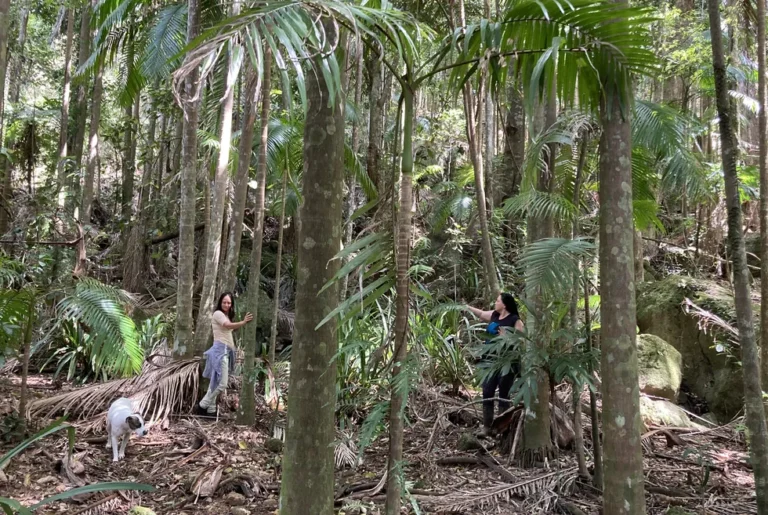
Country and its deep past is a vital part of First Peoples’ heritage. To respect this heritage and “keep everything in balance,” built environment professionals must develop relationships with local communities who can narrate and interpret for each project. Danièle Hromek explains how she supports non-Indigenous practitioners to ensure that Country is at the heart of their designs.
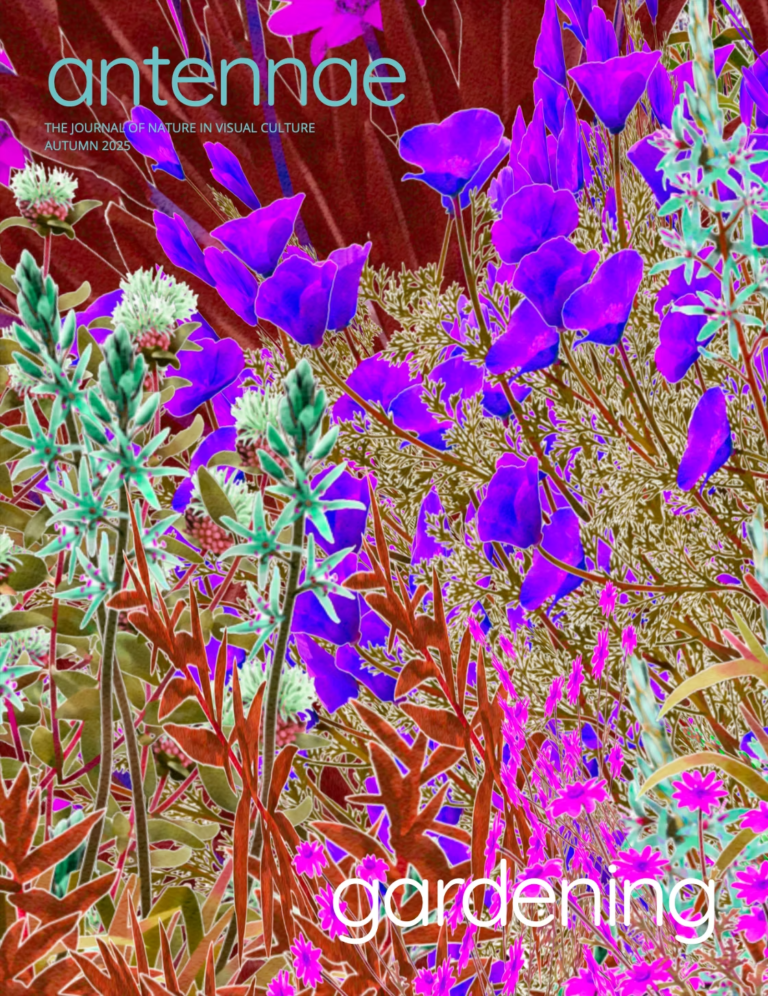
Gardens are secular sanctuaries; quiet spaces where belief blooms. If experienced from this perspective, with your knees firmly planted into the ground, a garden is not escape but rootedness.
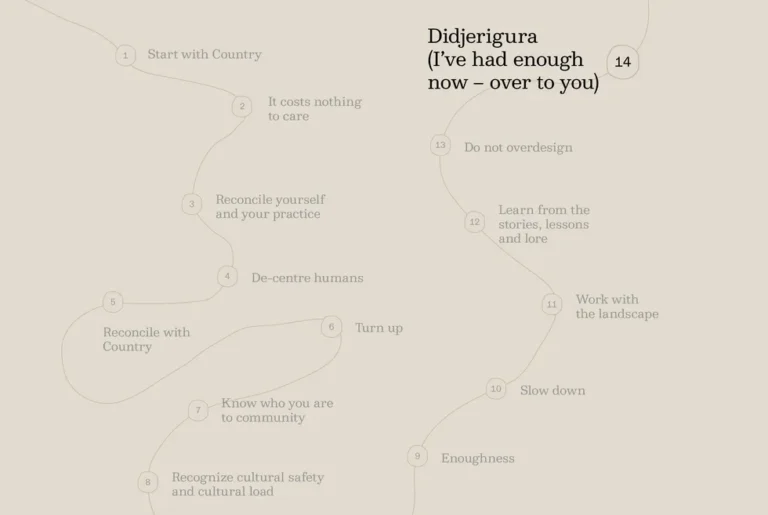
A dedicated platform for built environment professionals seeking to deepen their understanding and practice of culturally respectful and appropriate design for First Nations peoples.
The term Designing with Country is increasingly being commodified and colonised by non-Indigenous organisations and professionals. Each person has a responsibility and a role to play in honouring this process.
As Country-centred design1 becomes a part of architectural vocabulary in Australia, we at Djinjama have noticed colleagues and clients grappling to integrate Indigenous community advice respectfully and holistically, while also considering the actual implications in built outcomes and form.
The built environment can play a pivotal role in improving cultural safety for everyone. Exploring the concept from a First Nations perspective, Danièle Hromek, a Budawang woman of the Yuin nation, explains why it is imperative that designers understand cultural safety and consider it from project conception onwards.
“Spatial justice requires questioning about which filters, worldviews and perspectives are being considered in the design of a space – or indeed the deconstruction or dismantling of a space. If it does not include the perspectives of those who belong to the land, it is unjust,” writes Danièle Hromek.
When it comes to built environment projects, Danièle Hromek notes that it is not feasible nor culturally appropriate for non-Indigenous designers to lead the design of complex cultural experiences or concepts.
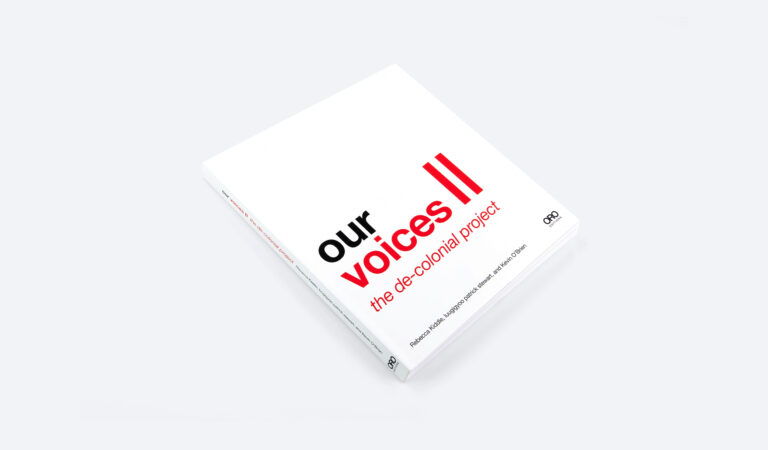
Danièle Hromek discusses how uncolonising gives space to decolonisation efforts by Indigenous peoples, leading to built environments that encompass different spatialities and, crucially, spaces specifically constructed for First Nations cultures.
The Connecting with Country Framework is a guide for good practice to help built environment professionals, clients and government respond to Country when they plan, design and deliver built environment projects.
For some First Nations communities it is customary not to mention names or reproduce images associated with the recently deceased. Members of these communities are respectfully advised that there may be people who have passed away mentioned in writing or depicted in image in on this website.