As Country-centred design1 becomes a part of architectural vocabulary in Australia, we at Djinjama have noticed colleagues and clients grappling to integrate Indigenous community advice respectfully and holistically, while also considering the actual implications in built outcomes and form.
Danièle Hromek, Siân Hromek, Carlos Porras, Ellen Hopkins-Wright, Kristelle De Freitas and Shanaya Perera.
Archiutecture Australia
2024
As Country-centred design1 becomes a part of architectural vocabulary in Australia, we at Djinjama have noticed colleagues and clients grappling to integrate Indigenous community advice respectfully and holistically, while also considering the actual implications in built outcomes and form. Our sense is that the system itself is the obstacle. For instance, a Country-centred approach requires a holistic view of the world in which humans are one part of a huge, interconnected network. This contradicts a human-centred approach, which is still taught in many design schools and remains the predominant approach. To achieve a Country-centred approach, designers need to reframe their worldview to consider Country and all it encompasses – holistically. This concept is expressed in the diagram below, where we start with Country and continue to be led by Country throughout the design development. We recognise that this is not a simple ask. Nonetheless, there are things that can be achieved, even within the current system, by asking reframing questions throughout the process.
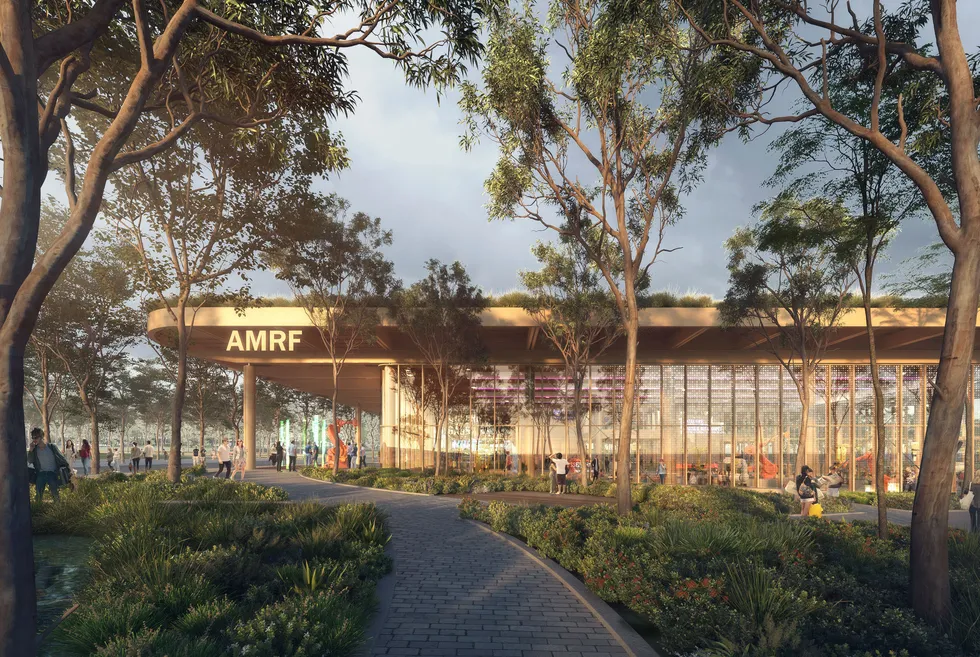
Djinjama collaborated with Hassell on the Advanced Manufacturing Research Facility on Dharug Country in Western Sydney. Country is lead designer for this building, with the structure having a sense of rising up from the ground, being accessible and permeable, informed by the movement of water, and the beautiful Cumberland Plains.
For some First Nations communities it is customary not to mention names or reproduce images associated with the recently deceased. Members of these communities are respectfully advised that there may be people who have passed away mentioned in writing or depicted in image in on this website.