“Spatial justice requires questioning about which filters, worldviews and perspectives are being considered in the design of a space – or indeed the deconstruction or dismantling of a space. If it does not include the perspectives of those who belong to the land, it is unjust,” writes Danièle Hromek.
Danièle Hromek, Siân Hromek, Carlos Porras, Ellen Hopkins-Wright, Kristelle De Freitas and Shanaya Perera.
June 2024
As Country-centred design becomes a part of architectural vocabulary in Australia, we at Djinjama have noticed colleagues and clients grappling to integrate Indigenous community advice respectfully and holistically, while also considering the actual implications in built outcomes and form. Our sense is that the system itself is the obstacle.
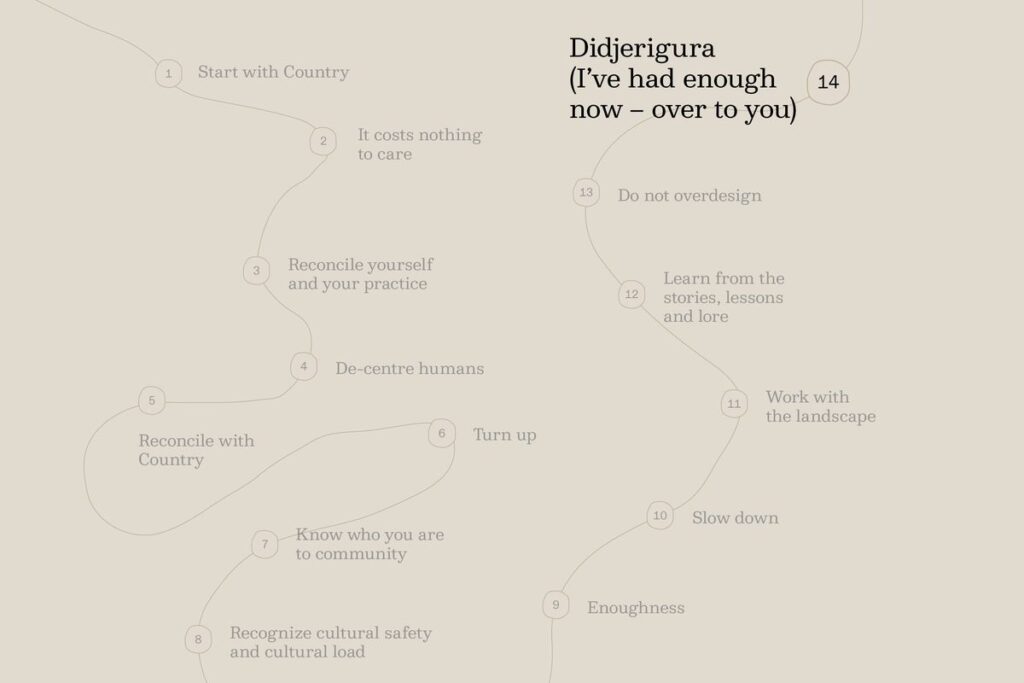
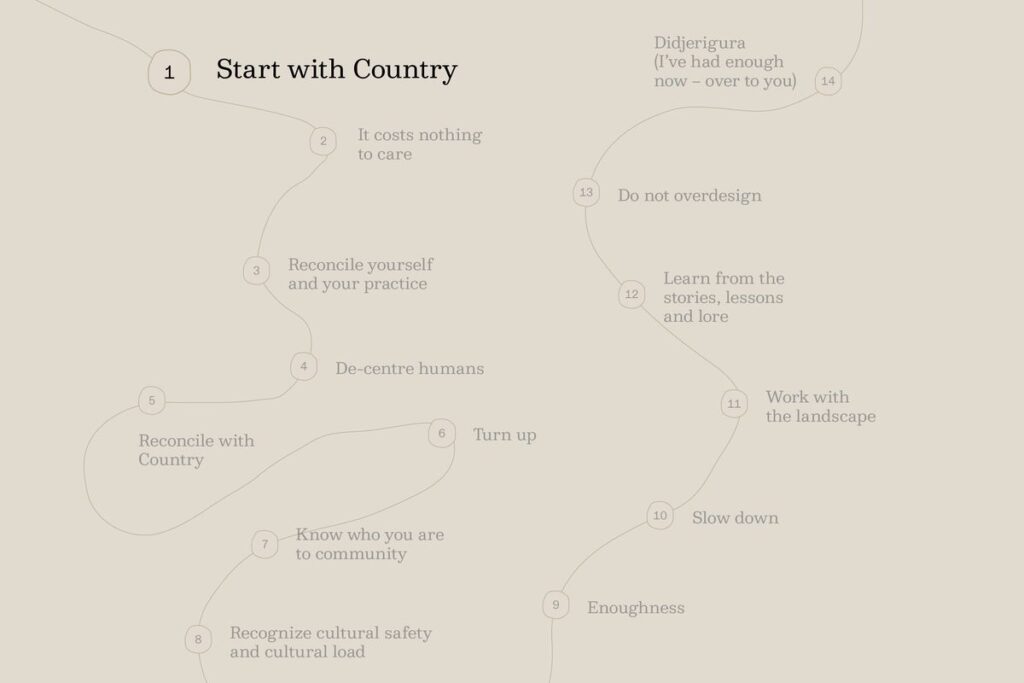
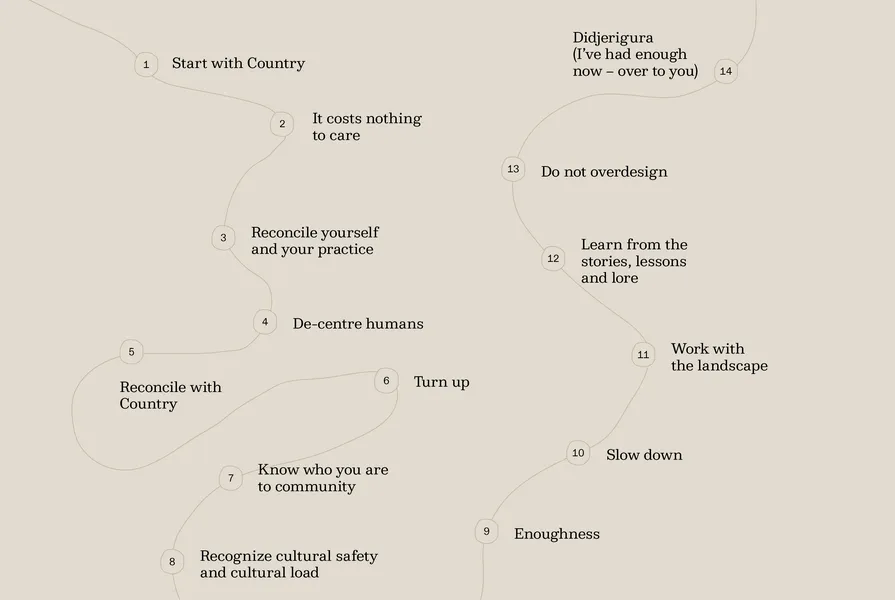
This question is on the minds of many non-Indigenous architects wanting to learn how to design with Country. Budawang/Yuin woman and spatial designer Danièle Hromek has gathered together a group of individuals to answer it, using 14 interconnected principles.
For some First Nations communities it is customary not to mention names or reproduce images associated with the recently deceased. Members of these communities are respectfully advised that there may be people who have passed away mentioned in writing or depicted in image in on this website.